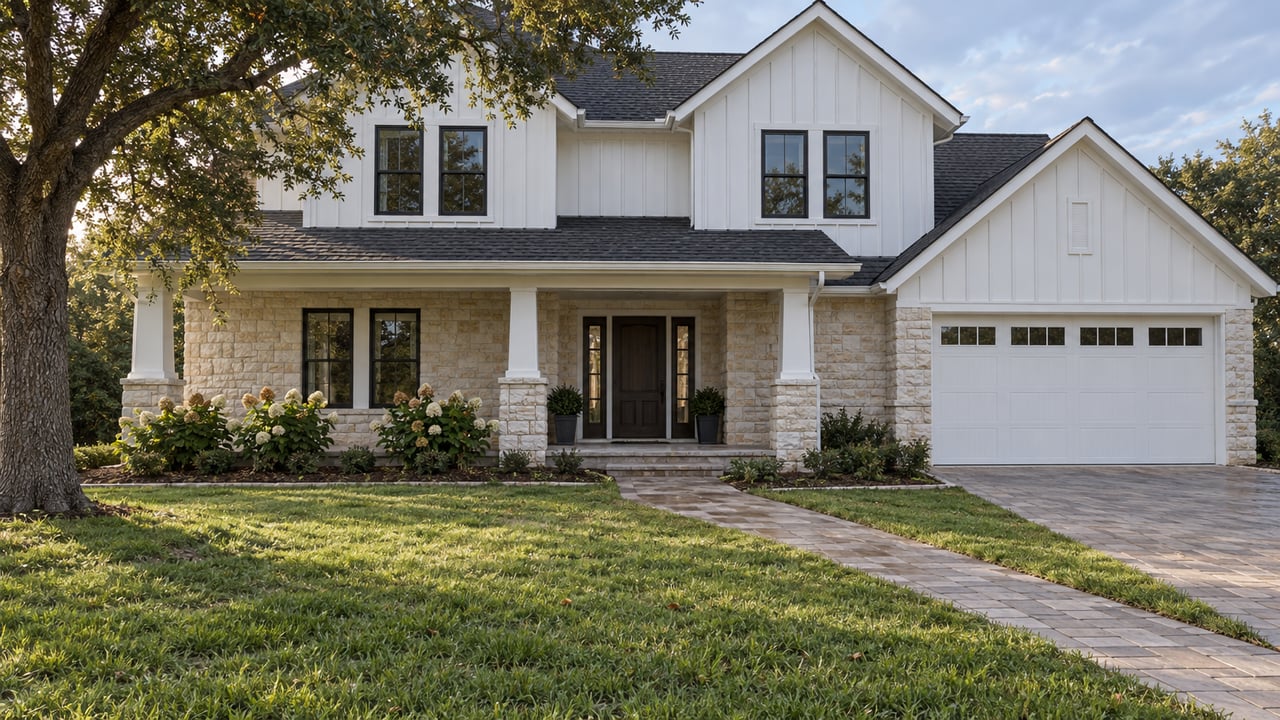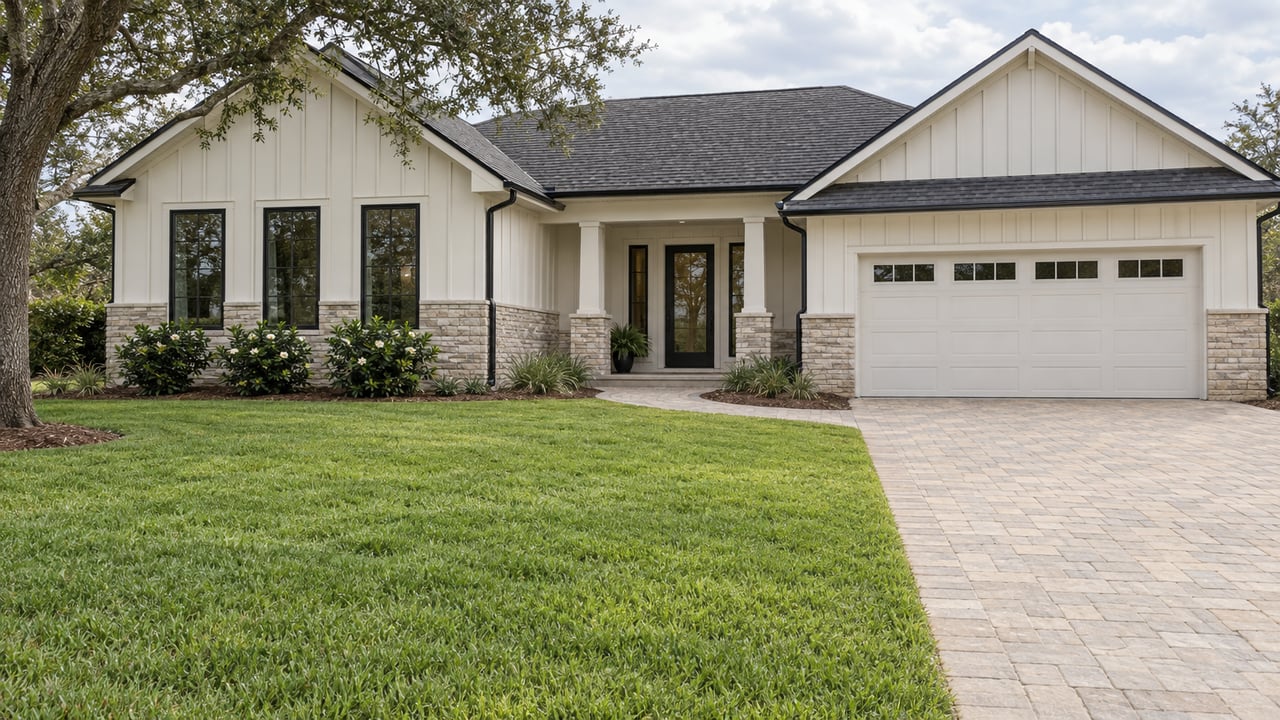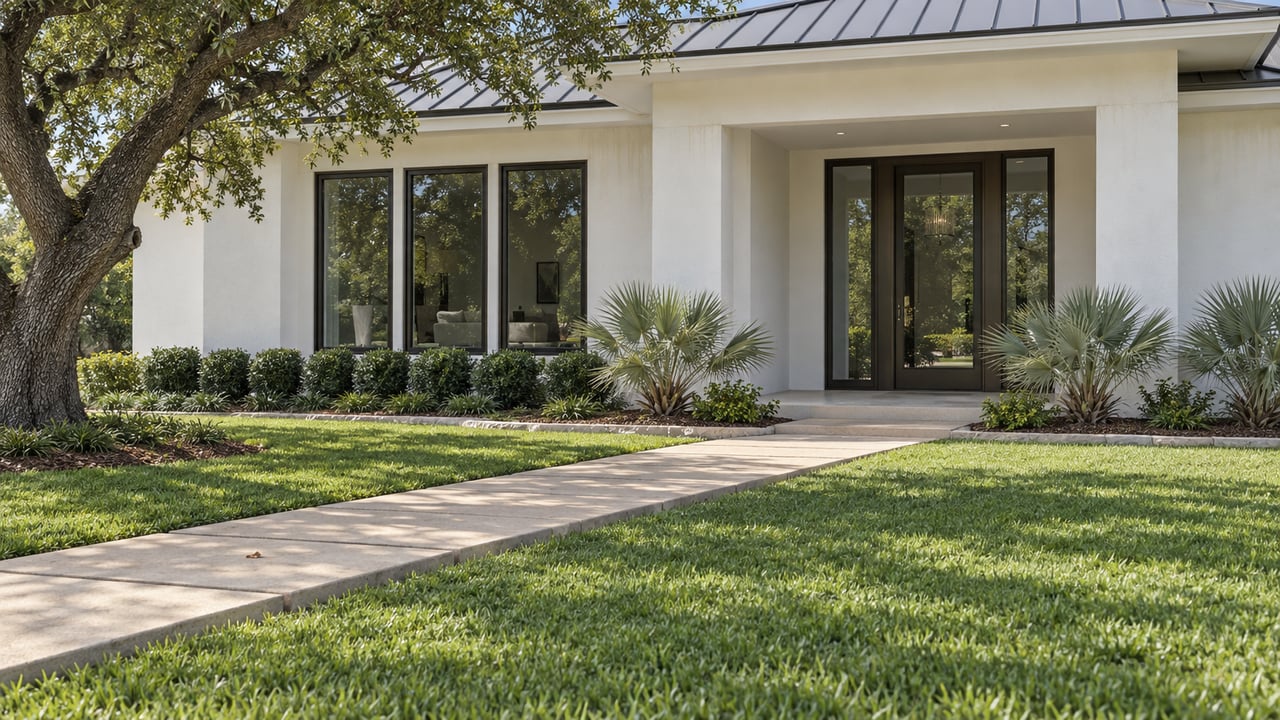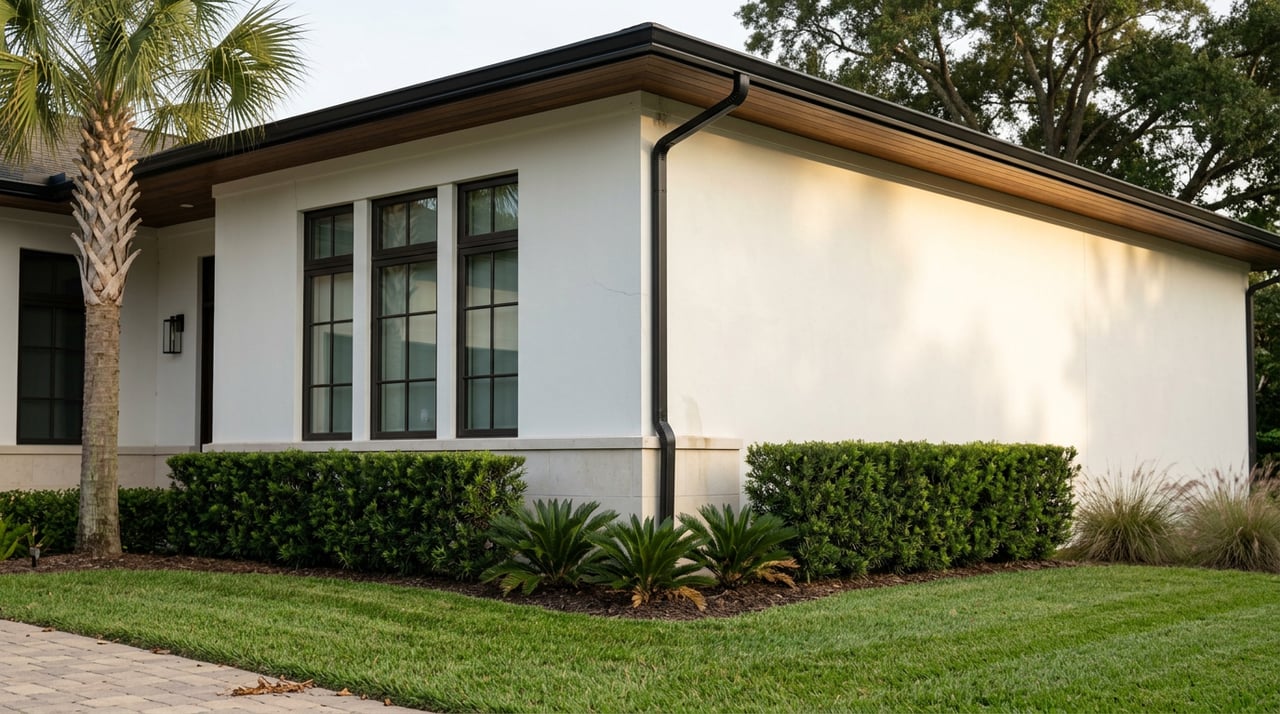
Two buyers put in offers the same week, both around $950,000. One is a three-bedroom near A1A, built in 1988, with an ocean-side lot and mature landscaping. The other is a similar-sized new build in SilverLeaf, twenty minutes inland, still smelling like fresh drywall. On paper, the contracts look like twins. Then the insurance quotes come back, and they are not twins at all. The beach house is quoted at nearly double the annual premium of the inland build, and the buyer who assumed price parity meant cost parity is suddenly redoing the math on their monthly payment two weeks before closing.
This is not a story about coastal homes being a bad idea. It is a story about what the sale price does and does not tell you. In St. Johns County right now, the gap between an older near-the-water home and a comparable new build isn't really about school district or square footage. It's about how insurers price construction year and wind mitigation, and that math can move thousands of dollars a year in either direction, regardless of what the listing says.
The Credit You Get Automatically, and the One You Don't
Florida's building code went through a major overhaul in the early 2000s, and homes built after that point are constructed with hip roofs, roof-to-wall connections, reinforced openings, and secondary water resistance baked in from the start. Insurers reward those features with wind mitigation credits, and because the features are part of the original construction, a new build in SilverLeaf, RiverTown, or Nocatee typically receives the discount without anyone having to prove anything.
An older Ponte Vedra Beach home built before that code overhaul may have some of those same features. Many owners have replaced roofs, added hurricane clips, or installed impact windows over the years. The difference is that none of it counts for insurance purposes until a licensed inspector documents it on a wind mitigation form and submits it to the carrier. Skip that step, and a home with genuinely strong storm protection gets priced as if it has none. This is the single most common reason a seller's current premium and a buyer's first quote on the same house look nothing alike.
The practical move for anyone under contract on a home from that era is to schedule the wind mitigation inspection early, before the underwriting deadline is bearing down. It typically runs alongside a 4-point inspection, which most carriers require on homes in the 20 to 40 year range depending on the company, and ordering them together at one visit tends to save money over booking two separate appointments.
Construction Era at a Glance
| Home built | What insurers typically ask for | Wind mitigation credit |
|---|---|---|
| Before 2001 | A wind mitigation inspection to document existing features | Only applies once documented |
| 2001 or later | Usually nothing extra to claim the credit | Applied automatically at underwriting |
| 20 to 40 years old (any era) | A 4-point inspection covering roof, electrical, plumbing, HVAC | Separate from wind mitigation, often required to bind or renew |
None of this means an older Ponte Vedra Beach home is uninsurable or a poor purchase. It means the premium is a negotiable, documentable number, not a fixed penalty for the address.
The 2026 Market Is Actually Moving in Buyers' Favor
The timing helps. Citizens Property Insurance, the state-backed insurer of last resort, cut its average homeowners multiperil rate by 8.8% statewide effective July 1, 2026, the first rate decrease the company has filed since 2015. Private carriers have started filing reductions of their own behind that move. For a buyer who got quoted a discouraging number in 2024 or 2025, it is worth asking for a fresh quote now rather than assuming last year's number still holds.
That softening narrows the gap between an older beach home and a new inland build, but it does not erase it. Rate cuts apply as a percentage, so a policy that started higher because of construction era and wind exposure still ends up higher after the discount than a policy that started lower. The relative math holds even as the absolute numbers come down for everyone.
What Flood Insurance Adds to the Comparison
Wind coverage is only half the picture. St. Johns County participates in the National Flood Insurance Program's Community Rating System, and the county holds a Class 5 rating, placing it in the top 17 percent of all CRS-participating communities nationwide as of 2025. That rating earns every qualifying property owner an automatic 25% discount on National Flood Insurance Program premiums inside a Special Flood Hazard Area, and a 10% discount even outside one. The discount is not something you apply for. It should already be reflected on the declarations page of any NFIP policy quoted for a St. Johns County address, and it is worth confirming it is actually there rather than assuming it.
Here is where the comparison gets interesting rather than simply expensive. A near-the-water Ponte Vedra Beach lot is more likely to sit inside a mapped flood zone, making flood-insurance requirements part of the comparison. Many interior lots in SilverLeaf or Nocatee sit on higher ground mapped as Zone X, where flood coverage is optional. That does not mean the inland option is automatically free of flood cost. FEMA's current Risk Rating 2.0 methodology prices flood premiums using a property's specific elevation and distance to water rather than a broad zone label alone, so an interior lot near a retention pond can still carry a real premium. The honest comparison requires pulling the flood zone for the specific lot in question, not the zone for the community's marketing map.
The Dunes Behind the Numbers
Part of why Ponte Vedra Beach's coastal exposure looks different today than it did a decade ago is a completed piece of public infrastructure. The Ponte Vedra Beach Restoration Project, a $38.6 million effort, rebuilt storm-damaged dunes to heights of 13 to 18 feet across roughly nine miles of coastline, finishing in mid-2024. That is not a marketing point and it does not change how an underwriter reads an oceanfront address on a rate table. It is a real, engineered layer of storm protection that predates most current listings, and it is a fair thing for a buyer to know exists when they are weighing what an older beachfront home is actually protected by, separate from what its insurance bill says.
What This Actually Means If You're Comparing Two Contracts
If you are choosing between a near-the-water Ponte Vedra Beach home and something newer inland, the sale price is the least useful number for comparing true cost. Before you commit to either:
- Ask for the wind mitigation report on any home built before the early 2000s, not just the listing sheet. If one does not exist, get one ordered before your underwriting deadline.
- Get the flood zone for the exact parcel, not the neighborhood in general, and confirm the CRS discount is actually applied to any NFIP quote you receive.
- Re-shop the policy even if the seller's current premium looks reasonable. Carriers are filing 2026 rate changes on different timelines, and last year's premium is not this year's quote.
- Add the 4-point inspection to the same visit as the wind mitigation inspection if the home falls in that 20 to 40 year range. It is typically cheaper together than as two separate calls.
None of this is a reason to rule out an older coastal home or to assume new construction wins by default. It is a reason to treat the insurance quote as part of the offer, not an afterthought that shows up after you are already emotionally attached to the house.
A Few Questions Worth Asking Directly
Does every Ponte Vedra Beach home need a wind mitigation inspection? No. Homes built in 2001 or later usually already qualify for the credits through their original construction. It is homes built before that point where the inspection actually changes the number.
Why check the flood zone for a home near the water? The specific lot matters. Two homes on the same street can fall into different zones, so the parcel-level check matters more than the neighborhood's general reputation.
Will the 2026 rate cuts make an older home as cheap to insure as a new one? Not automatically. The percentage reduction applies to whatever base rate a home already carries, so a policy that started higher due to construction era typically stays higher after the cut, just less painfully so than it would have a year ago.
Comparing two contracts by sale price alone leaves out the number that actually shows up on your monthly statement for as long as you own the home. If you are weighing a near-the-water Ponte Vedra Beach property against something newer inland, Katie Kravtsov can help you pull the specific flood zone, timeline the wind mitigation inspection against your closing date, and put the real carrying cost of each option side by side before you have to decide. Schedule a free consultation to talk through the properties you're actually comparing.
This article is general information, not legal, tax or financial advice. Consult a qualified professional about your situation.